Showing posts with label SIDS. Show all posts

Monday, 26 November 2012

Statement delivered by Nauru on behalf of the Alliance of Small Island States (AOSIS) at the Opening Plenary, 18th Conference of the Parties, Doha, Qatar


26 November, 2012


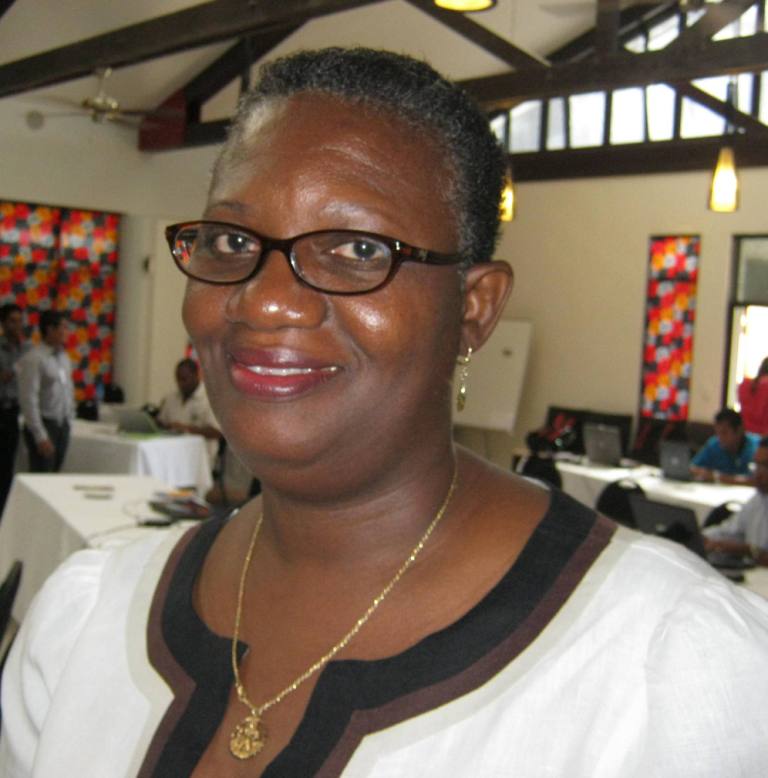
Ambassador Marlene Moses, Chair of the Alliance of Small Island States


"Thank you very much, Mr. President.

Nauru has the honour to speak on behalf of the Alliance of Small Island States, a coalition of 44 members particularly vulnerable to the impacts of climate change.

AOSIS associates itself with the statement made by Algeria on behalf of the Group of 77 and China, The Gambia on behalf of the Least Developed Countries, and Swaziland on behalf of the African Group.

Mr. President, 

At the outset, please allow me to congratulate you on your election to the presidency and to thank the Government and the people of the State of Qatar for their warm reception. Let me also assure you of our support and our constructive engagement in these negotiations as we seek to ensure a successful outcome here in Doha. 

Mr. President, 

Twenty years ago, in recognition of the dangers of climate change, we came together as a global family and negotiated the UNFCCC. It was then a truly ambitious agreement – the product of a time when humanity seemed ready to tackle the greatest challenges of our generation. 

We agreed that those with the greatest responsibility for the problem and greatest capability to address it would take the lead. It was recognized that developing countries would need assistance, particularly the most vulnerable among us. And we set as our objective, not to slow, not to delay, but to prevent dangerous interference with the climate system.

At its heart, the Convention was a pact we all made to safeguard the lives and life prospects of present and future generations. As we convene here in Doha at what is an important crossroads in our global effort to combat climate change, it is appropriate to reflect on whether or not we have realized our noble ambitions. 

It is difficult to answer in the affirmative when only one month ago, Hurricane Sandy hit our brothers and sisters in the Caribbean and in the United States, resulting in dozens of deaths and billions of dollars in damage, and reminding us that we are all in this together. Many island communities have been experiencing the impacts of more frequent and more intense extreme weather effects for some time, but when the tragedies occur far away from the media’s spotlight, they are too easily ignored or forgotten. 

As we embark on our negotiations over the next few weeks, we must keep in our minds and in our hearts the victims of Hurricane Sandy, many of whom are still trying to put their lives back together, and the countless other members of our global family who are impacted by climate change. 

Mr. President, 

This conference is about nothing less than preserving the fundamental integrity of the climate change regime, and that must begin with a strong second commitment period under the Kyoto Protocol. The Kyoto Protocol is the legal embodiment of the commitment made by Annex I Parties to take the lead in addressing climate change. It is only because of the promise of a second commitment period that the developing world agreed to enter negotiations under the Durban Platform on a new legal agreement “applicable to all.” 

Bringing all countries under one protocol is a fundamental change in the regime with potentially far reaching implications, but it was also part of a larger package. If the developed world shirks its responsibility, then there will be no chance of a meaningful legal agreement under the Durban Platform.

But a second commitment period under the Kyoto Protocol cannot be a second commitment period in name only - it must be ambitious and it must be credible. 

AOSIS Leaders met in New York two short months ago and adopted a Declaration reaffirming our positions on the Kyoto Protocol. Our Heads of State and Government have agreed that a credible second commitment period must include more ambitious QELROs from Annex I Parties, a 5-year commitment period, provisional application, flexibility mechanisms limited to those Parties taking on internationally legally binding mitigation commitments, and lastly, strict limits on the carryover of surplus AAUs, as proposed by the G77 and China. 

The offer from partners currently on the table is deeply inadequate in ambition, would subvert the integrity of the international regime, and thereby jeopardise the entire Durban package. If developed countries cannot live up to their current obligations, how can we have any confidence in a future agreement. 

Mr. President, 

The UNEP Gap Report makes it clear that ambition must be raised urgently. The gap is growing! The world is on a dangerous trajectory that will take us to over 3 degrees of warming and we are running out of time to change course. This is why AOSIS has proposed a comprehensive workplan to continue enhancing mitigation ambition over the next two years. The agreement to undertake such a workplan was another critical element of the Durban package and essential to allowing AOSIS to join consensus. It must remain a central priority for our work here in Doha. 

An outcome in Doha that does not include a substantive set of workplan activities for 2013 to increase pre-2020 mitigation ambition is one that AOSIS cannot accept. As we have said before, a failure to close the pre-2020 mitigation ambition gap would have profound implications for the scale, scope and nature of the necessary commitments and obligations under the new Protocol we have committed to adopt in 2015. An intensive and concerted effort to close the gap must start here in Doha.

Mr. President, 

Long-term finance was the missing element of the Durban package and it must not be forgotten in Doha. Developed countries have committed to mobilize 100 billion dollars per year by 2020 to fund adaptation and mitigation in developing countries. We need concrete commitments towards fulfilling that promise. As it now stands, the Green Climate Fund is an empty shell and the fast start financing period will conclude at the end of this year. 

AOSIS calls for a commitment by developed countries to ensure that there is no gap in the provision of scaled-up, new and predictable climate finance to developing countries after the end of the fast start finance period. In this regard, we call for the commencement of a second fast start-like period from 2013-2015. We also call for common accounting rules to ensure that these funds are truly new and additional. This is critical given the urgent and immediate needs of developing countries that are particularly vulnerable to the adverse effects of climate change. 

Mr. President, 

Lastly, establishing an international mechanism to address loss and damage from the adverse effects of climate change has long been a priority of AOSIS. It takes on even more urgency in light of the low mitigation ambition reflected in current pledges, the worsening of climate impacts, and the inadequacy of international support for adaptation strategies in vulnerable countries. AOSIS has made a concrete proposal on a mechanism for loss and damage and we look forward to agreeing to establish such a mechanism here in Doha. 

Mr. President, 

AOSIS is here to ensure that our rhetoric is reflected in our actions. How can we accept an outcome that lacks environmental integrity and pat ourselves on the back for having reached an agreement that fundamentally jeopardises our future? The letter and the spirit of the Convention must guide our work here in Doha. We must be able to look our children and grandchildren in the eye, and tell them that we fought to protect a safe and prosperous future for all. 

Thank you, Mr. President."

Wednesday, 8 June 2011

Photo collection from the Lessons for Future Action Conference


You are invited to view Ewan Cameron's photo album: Lessons for future action photo file 1
Lessons for future action photo file 1
Apia, Samoa -
May 26, 2011
by Ewan Cameron
Message from Ewan Cameron:
copy and past to the blogspot
To share your photos or receive notification when your friends share photos, get your own free Picasa Web Albums account.


You are invited to view Ewan Cameron's photo album: Lessons for future action photo file 2
Lessons for future action photo file 2
Apia, Samoa -
May 26, 2011
by Ewan Cameron
To share your photos or receive notification when your friends share photos, get your own free Picasa Web Albums account.


You are invited to view Ewan Cameron's photo album: Lessons for future action photo file 3
Lessons for future action photo file 3
Apia, Samoa -
May 26, 2011
by Ewan Cameron
To share your photos or receive notification when your friends share photos, get your own free Picasa Web Albums account.


You are invited to view Ewan Cameron's photo album: Lessons for future action photo file 4
Lessons for future action photo file
Apia, Samoa -
May 25, 2011
by Ewan Cameron
To share your photos or receive notification when your friends share photos, get your own free Picasa Web Albums account.


You are invited to view Ewan Cameron's photo album: Lessons for future action photo file 5
Lessons for future action photo file 5
Apia, Samoa -
May 25, 2011
by Ewan Cameron
To share your photos or receive notification when your friends share photos, get your own free Picasa Web Albums account.


You are invited to view Ewan Cameron's photo album: Lessons for future action photo file 6
Lessons for future action photo file 6
Apia, Samoa -
May 25, 2011
by Ewan Cameron
To share your photos or receive notification when your friends share photos, get your own free Picasa Web Albums account.


You are invited to view Ewan Cameron's photo album: Lessons for future action photo file 7
Lessons for future action photo file 7
Apia, Samoa -
May 24, 2011
by Ewan Cameron
To share your photos or receive notification when your friends share photos, get your own free Picasa Web Albums account.


You are invited to view Ewan Cameron's photo album: Lessons for future action photo file 8
Lessons for future action photo file 8
Apia, Samoa -
May 23, 2011
by Ewan Cameron
To share your photos or receive notification when your friends share photos, get your own free Picasa Web Albums account.


You are invited to view Ewan Cameron's photo album: Lessons for future action photo file
Lessons for future action photo file
Apia, Samoa -
May 24, 2011
by Ewan Cameron
To share your photos or receive notification when your friends share photos, get your own free Picasa Web Albums account.


You are invited to view Ewan Cameron's photo album: Lessons for future action photo file
Lessons for future action photo file
Apia, Samoa -
May 23, 2011
by Ewan Cameron
To share your photos or receive notification when your friends share photos, get your own free Picasa Web Albums account.


You are invited to view Ewan Cameron's photo album: Lessons for future action photo file 10
Lessons for future action photo file 10
Apia, Samoa -
May 23, 2011
by Ewan Cameron
To share your photos or receive notification when your friends share photos, get your own free Picasa Web Albums account.


You are invited to view Ewan Cameron's photo album: Lessons for future action photo file_1
Lessons for future action photo file_1
Apia, Samoa -
May 24, 2011
by Ewan Cameron
To share your photos or receive notification when your friends share photos, get your own free Picasa Web Albums account.


Holistic view need for climate change adaptation

By Mona  Ainu’u – Broadcasting Corporation of Niue


Closing bulletin, June 2011, Apia, Samoa - Global and regional climate change meetings targeting small islands and attended by Pacific Islands countries and territories contribute to strengthening the capacity of Pacific Island countries says Dr Netatua Pelesikoti, Manager of the Pacific Futures Program at the Secretariat of the Pacific Regional Environment Programme (SPREP).
   

Things that happen at the international and regional level have an impact at the national level, and vice versa. Climate change is a global issue and its impacts are felt in all development sectors of the Pacific.  

“The Pacific Islands participation in the United Nations Framework for the Convention of Climate Change (UNFCCC) is very important; Pacific Island countries are able to raise national climate change issues and ensure it is considered in the global agenda,” said Dr Pelesikoti.

“What is important are the financial mechanisms established as a result of the UNFCCC COPs that enable Pacific Island countries to implement enabling activities, such as adaptation and mitigation programmes.”

Dr Pelesikoti however recommends that the region responds to climate change risks through a holistic and integrated approach.   Pacific island countries and territories are extremely vulnerable to the impacts of climate change in all areas including the socio-economic, ecological and governance factors. But climate change adaptation should consider these vulnerabilities alongside other national development policies and programmes at all levels.  

Under the new SPREP strategic plan 2011 – 2015 (include link please) based on the priorities of member countries, it is aimed that all SPREP members will have strengthened capacity to respond to climate change through policy improvement, implementation of practical adaptation measures and enhancing ecosystem resilience to the impacts of climate change. 

The Climate Change division of SPREP is supporting Pacific island countries and territories in these areas through regional projects such as the Pacific Adaptation to Climate Change (PACC) and Pacific Islands Greenhouse Gas Abatement through Renewable Energy (PIGGAREP) an initiative to remove barriers to low carbon development.  Both of these particular programmes are funded by the Global Environment Facility (GEF) through the United Nations Development Programme and SPREP.

“We all know the ecological systems and economic systems are all closely linked and both underpin social development among others,  you have to look at the linkages within these systems including climate data to inform the most appropriate adaptation response, one would prioritise”.

Dr Pelesikoti presented at the Lessons for Future Action climate change conference in Samoa during the session on National Planning and Policy Frameworks.  The conference was held from 23 to 25 May, bringing together over 140 participants from the Pacific, Indian and Caribbean Oceans.

Your thoughts…..

Michael Nanua Senior Journalism Student – Vanuatu Institute of Technology

How can we make bottom-up planning for climate change adaptation and disaster risk reduction more effective?

Quick definition of Bottom up planning – Planning is to start from the community and then this is worked through different levels so it ultimately get folded into national plans.

Rebecca McLean
AUSAID, Suva Fiji

I think the bottom up planning for climate change adaption and disaster risk reduction will be more effective if the governments build a good relationship or strong linkage with the communities and lead some ideas up to national and international level.

Gabor Vereczi
Regional Technical Advisor on Climate Change Adaptation for the Pacific
UN international Development Program


I think the bottom line is that we need to engage with the traditional villagers and their leaders and study their structures and need to engage also with the government representatives, youth groups and the church groups that are also important in the Pacific.

I think that once you find those leaders and you have them fully engaged in the project then they will be your best advocators.

And I think another mechanism is the sharing of the knowledge management for example is when you’re engage with a village for the project, you better take it to another village where they didn’t done this before so that can look and learn on what is happening on the ground. I think it’s better to have constant flow information. 

Marina Illingworth
AUSAID, Suva Fiji
It is very important to create the ownership value with the communities if they want to own a project then the development partners will help and we can assure them that the project will continue because they do understand things happening to our resources.  Because of that I think that a very important aspect of the bottom up planning is to focus more on the ownership.


Kenrick Lesley
Executive Director of the Caribbean Community of Climate change Centre.

We have to remember that the Climate Change will not impact me, I’m too old. It will be for the children and my grandchildren and therefore we have to educate them as to “what is Climate Change” and “what they can do” because children can influence they parents and the parents can influence the policy makers and therefore we need to get this from bottom up and that will continue in our life. But if you take from the top they will only looking for short times. Children will make it for a long term period because Climate Change will be a long term and that’s the way I see the importance for the bottom up planning.


Brenda Koon-Wai-You
Red Cross, Samoa
We do that in Red Cross, sometimes we have to go to the communities and run the awareness programs called Preparedness and Awareness in the Communities. That program includes the Climate Change and Disaster Risk Reduction because the Climate Change is striking now so we have to let them know as some of them have some good ideas that might help contributing in the issue.


Asaia Taape
PM’s office, Tuvalu
Well, in relation to my country Tuvalu where I come from, most of the time the planning is normally done at the community level. We do experience some challenges with their plans because the knowledge at this level is different from ours so we as the government official are trying to help them out with it. Despite this, I can see that it is more effective rather than making the plan at the top and going down.  

Claire Bernard
Planning Institute of Jamaica
We need to have an interface between national level planning and the community level planning because if we adopt the community level planning alone, the action could conflict the national objectives. I think need to have some coincidence between the two then we will recognise the knowledge of the communities as well and the national planning can take that and put it into consideration.  I think we need both to have the best possible solutions.

We just can’t do it one way because sometimes the communities have good knowledge and so on but sometimes they need additional knowledge from outside. Community have to go up as the national have to come down and meet somewhere in the middle.

Augustine Poyotte
Ministry of Physical Development and the Environment
St Lucia.
I think it’s a case that we need to involve the local public a lot more than what has been done in the past.  I think we need to listen to the people who are going to lose and benefit from the varying changes that will be caused by the Climate Change.  But so far I think it will be good to have a mixture of both, I think it is one of the most effective ways to plan – the bottom up planning.